The Carpathian Mountains form a gothic backdrop to the region of Transylvania, so it is not surprising that dark literary myths and legends were born in this small part of Romania. And no time is better than Halloween to go and flush Dracula out right at home.
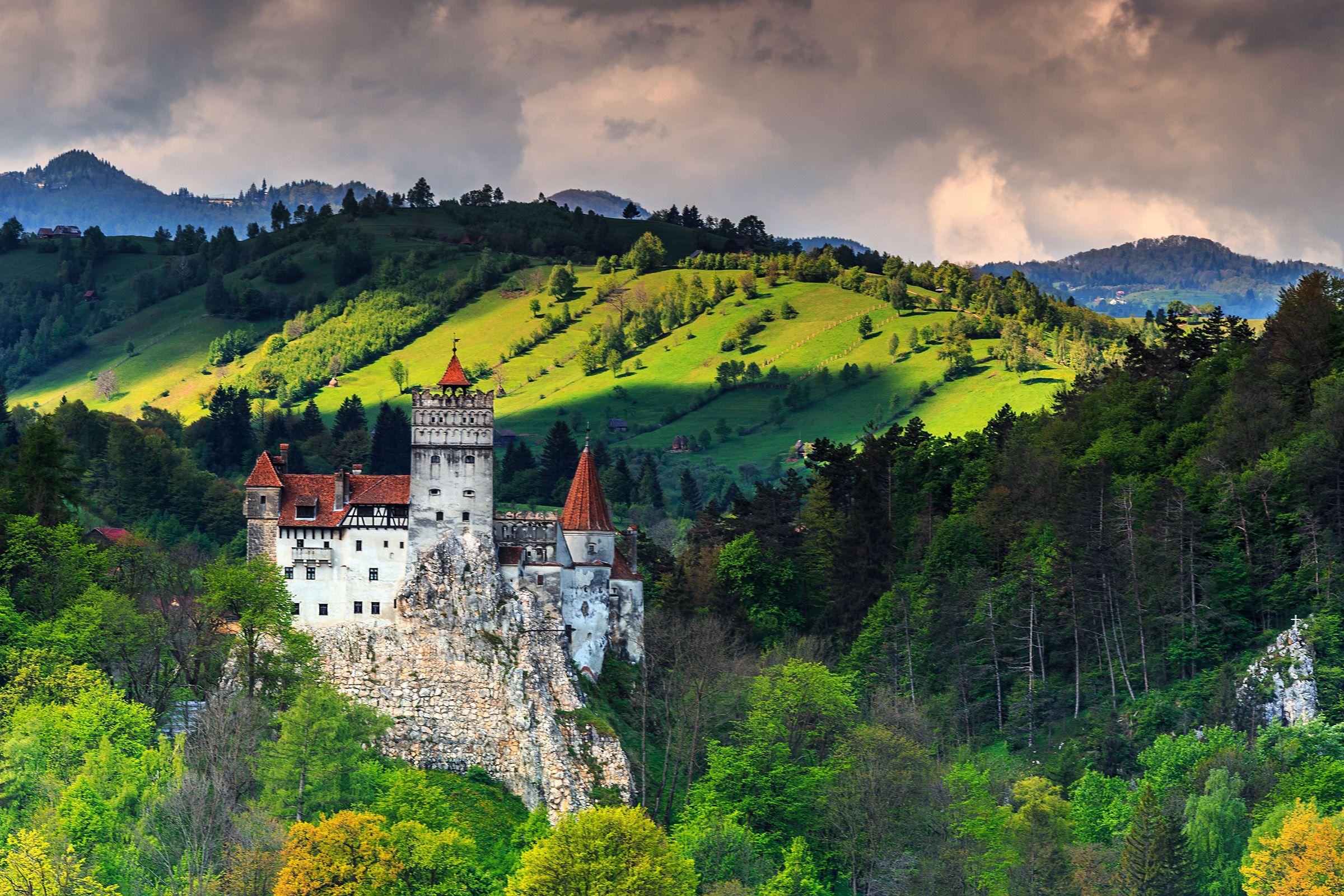
Bran Castle in Transylvania, Romania. ©Gaspar Janos/Shutterstock
The legend
The inspiration for the vampire count was Vlad Ţepeş (Vlad III), son of Vlad called Dracul, or 'the Dragon' ('Dracula' simply means 'son of Dracul'), who lived in the 15th century and was known as a bloodthirsty and ruthless man. Having succeeded his father as voivoda (governor) of Wallachia, Dracula went down in history as 'Vlad the Impaler'. A local joke has it that the towns ruled by Vlad were the ideal place to lose money: no one would appropriate it, for fear of the punishment of amputation and impalement.
Dracula: the novel by Bram Stoker
The myth of Dracula, born in Transylvania, is present in music, film and literature. It was precisely the legendary cruelty of Vlad III that inspired Dracula (1897), a novel from the pen of Irish writer Bram Stoker. Set (in part) in Transylvania, this Gothic novel restores Vlad III to life, or rather eternity, by making him the living dead.
The origin of the myth
Transylvanian folklore is full of demonic creatures: stories are told on long winter nights, when the wind howls through the Carpathian peaks. Visit remote valleys and dense forests cloaked in fog, and bring garlic to ward off vampires, should you ever encounter them!
The itinerary: Dracula's places
With a route starting from the historical Braşov and arriving at the wild Bârgău Valley, you will finally unveil the mysteries surrounding the historical figure at the origin of the legend. The route also explores the places narrated in the novel and not only those linked to the historical figure of Vlad Ţepeş.

The town of Brasov seen from above, Romania. ©Dziewul/Shutterstock
1. Mount Tâmpa
Mount Tâmpa dominates the city of Braşov characterised by Saxon buildings and watchtowers. Crowned by the gigantic Hollywood-like 'Braşov' sign, this mountain (940 metres) was once a place of death by impalement.
In fact, Vlad Ţepeş carried out one of the gruesome punishments for which he was feared right here. When the rich Saxon merchants who lived in the town refused to pay him tribute, Vlad III, who ruled Wallachia, situated a little further south, had forty of them impaled. The corpses were displayed on Mount Tâmpa as a deterrent.
A cable car will take you from Aleea Tiberiu Brediceanu to the top of the mountain, from where you can admire beautiful views of the medieval town of Braşov and walk to Poiana Braşov. Once there, one can imagine how gloomy the view of the mountain might have been in the 15th century.
Subscribe to our newsletter! For you weekly travel tips, special offers, stories from the world and 30% discount on your first order.
2. Sforii Street, Braşov
A five-minute walk from the lower cable car station is the old town of Braşov. Take a stroll through medieval-era alleys and peach and cream-coloured buildings: you will notice Strada Sforii, one of the narrowest streets in Europe (1.2 metres wide). Vlad Ţepeş unwittingly turned this street into the street of lovers: it is said that the voivode walked along it with his bride-to-be, taking advantage of the small space to steal a kiss from her. In a land where cruel stories about Vlad Ţepeş thrive, the legend of Strada Sforii shows a more romantic and well-rounded figure than the 'Vlad the Impaler' we know best.
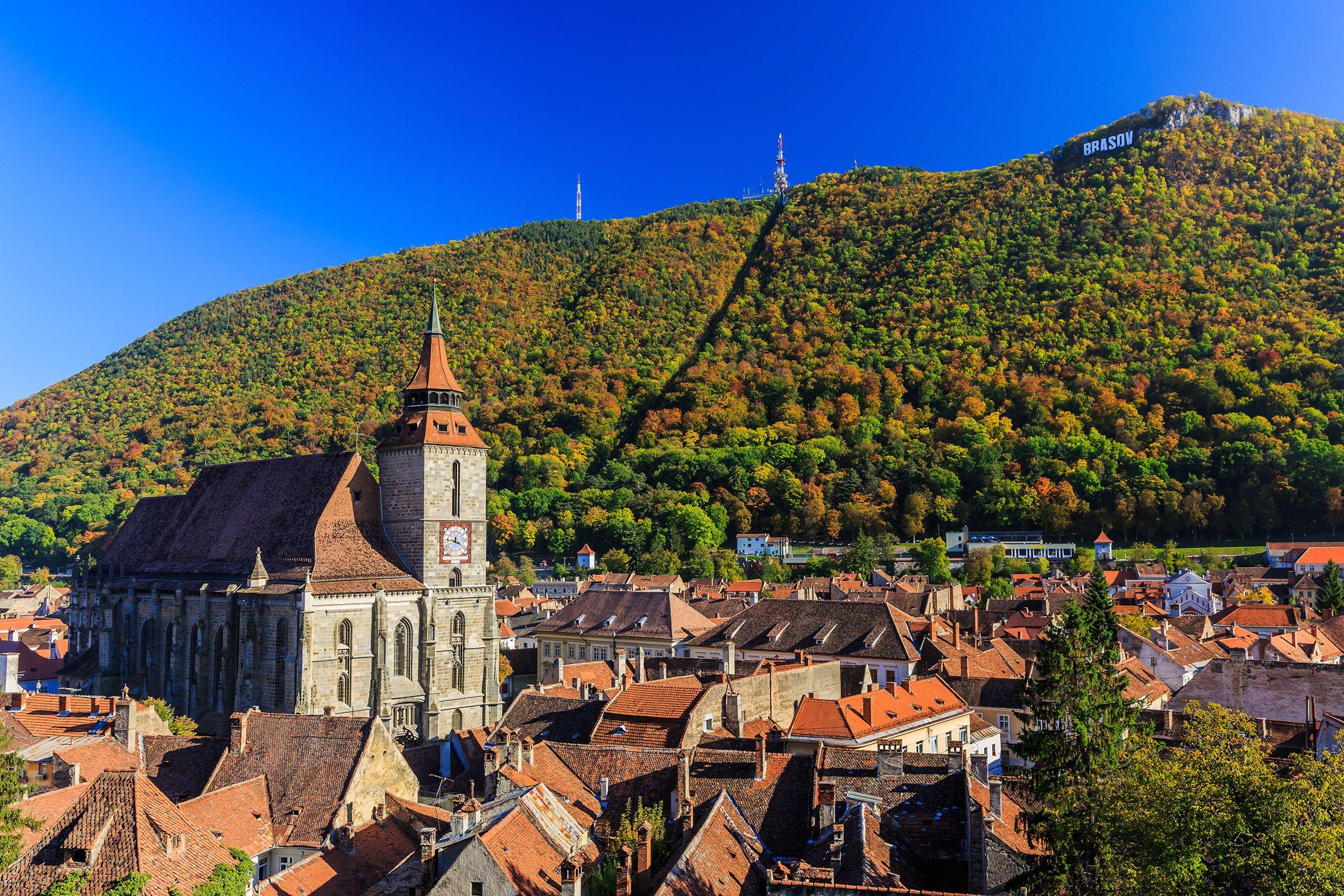
The famous 'black church' in Brasov, Romania ©sorincolac/Getty Images
3. Vlad Dracul House
Reach Sighişoara, driving 115 kilometres north from Braşov, and along the way you'll pass fortified churches and Saxon villages. Protected by medieval towers, the old town of Sighişoara boasts buildings over five hundred years old. Vlad Ţepeş was born here, in 1431, on the first floor of a mustard-coloured house, opposite the clock tower.
The Vlad Dracul House is a place that interests Vlad III fans as much as Dracula fans. Today, Vlad Dracul House houses a restaurant. The chairs look like 17th-century thrones, imposing chandeliers hang from the ceiling, and the meat menu ranges from goulash to pork chops, complete with suggestively named house wine ('Vin Prince Vlad'). Predictably, garlic is almost absent. After a feast worthy of a voivode of Wallachia, you pay five lei to visit the room where Vlad Ţepeş was born.
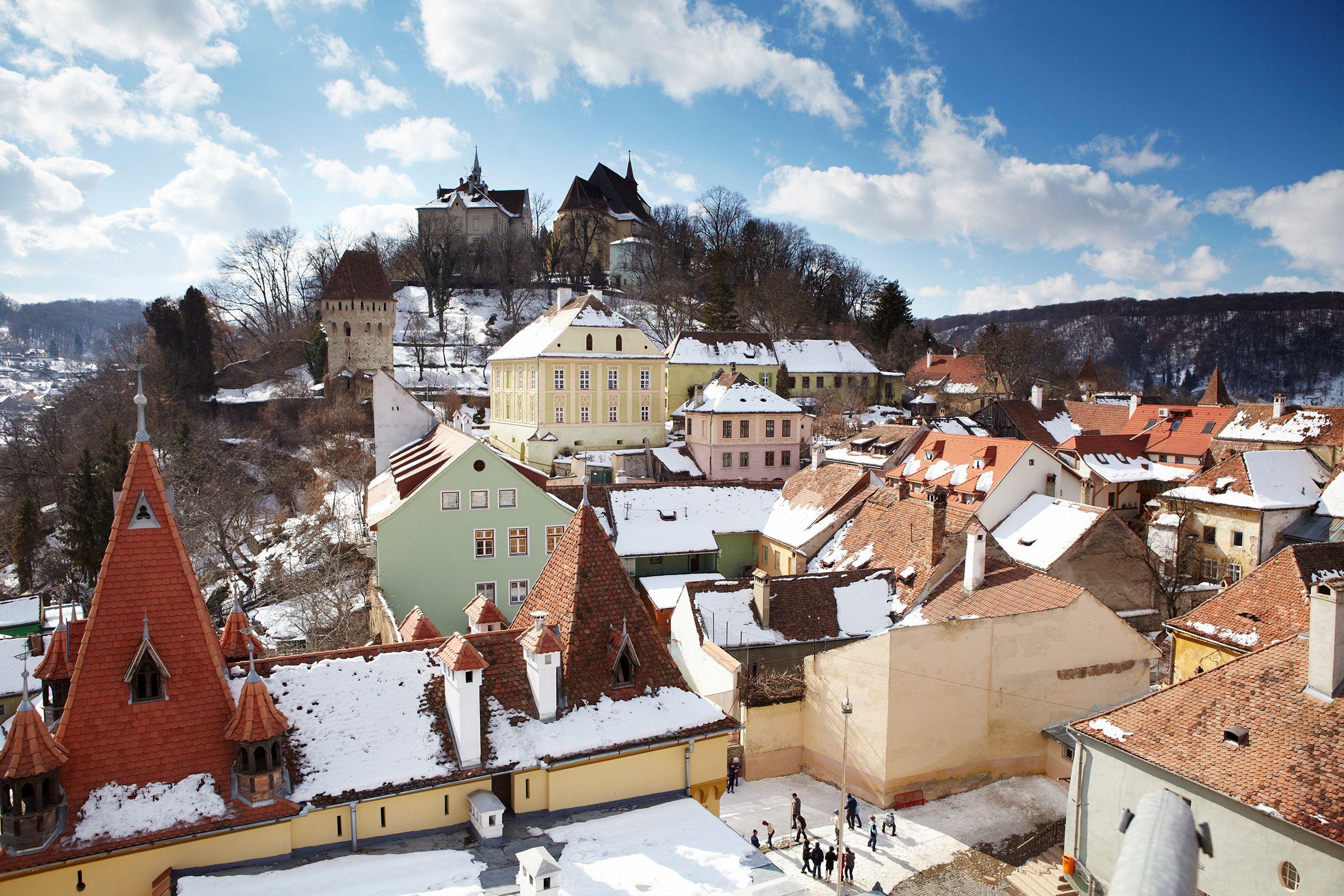
The medieval village of Sighisoara, where Vlad Dracul was born, Romania ©Matt Munro/Lonely Planet
4. Palace of Culture
The story of Vlad Ţepeş is not the only interesting aspect of Transylvanian folklore: this region abounds with tales and demonic creatures. The Palace of Culture in Târgu Mureş, less than an hour's drive north of Sighișoara, displays beautiful illustrations dedicated to those tales.
The Secessionist-style concert hall, completed in 1913, is richly decorated with Carrara marble details and busts depicting the world's greatest composers. Even more extraordinary is the Hall of Mirrors, whose polychrome stained glass windows depict scenes from fairy tales in the tradition of the Siculi (a Hungarian-speaking ethnic group living in Transylvania). The themes of seduction and destruction were taken up by the writer Bram Stoker, who drew on the Romanian tradition for his novel Dracula.
One episode depicts Sára, whose throat and chest are offered to a lascivious suitor: according to legend, Sára allowed herself to be seduced by the devil and paid with her life.
5. Old Town of Bistriţa
Northern Transylvania was not affected by the raids of Vlad Ţepeş, but it was these lands that inspired the writer Bram Stoker. In the novel Dracula, in fact, some peasants advised Jonathan Harker against continuing his journey to Bistriţa. This town can be reached from Târgu Mureş by a ninety-minute drive.
The character in the novel stayed in the Golden Crown Inn in Bistritz (the town's German name), which did not exist at the time. Today it is there, and is called Coroana de Aur.
The writer only knew Bistriţa from descriptions and drawings, but considered the location very suitable for the setting. From Coroana de Aur continue on foot to Strada Dornei and Piaţa Centrală. From the Gothic-style evangelical church, boasting spires and a bell tower, there are sumptuous Renaissance buildings. The cobbled streets of Bistriţa are dotted with cafes, but here no one will warn you not to continue on to the Bârgău Valley.
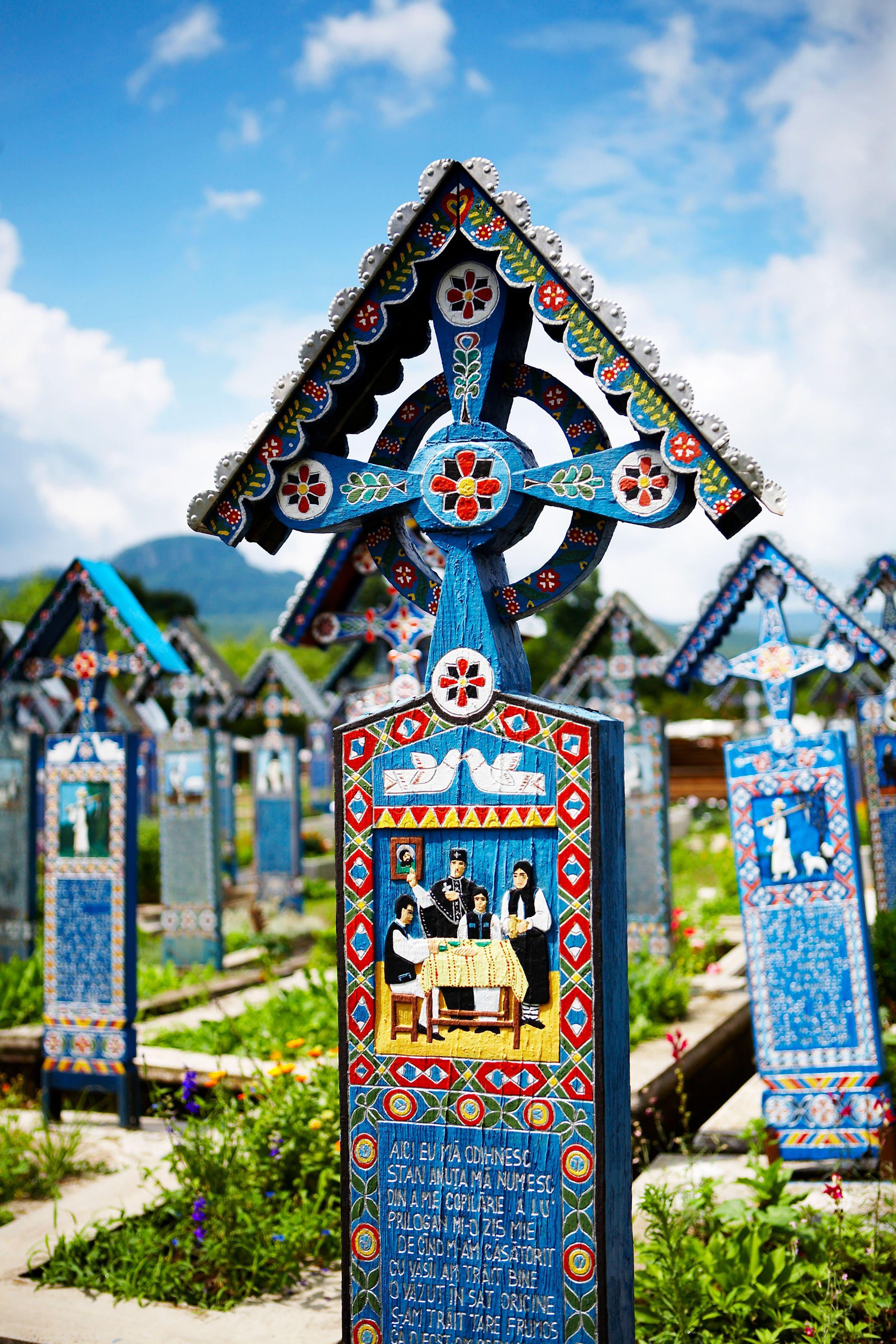
A traditional cemetery, Transylvania ©Matt Munro/Lonely Planet
6. Hotel Dracula Castle
Forty-five minutes from Bistriţa awaits the most fascinating stop on the itinerary. In the novel Dracula, the hapless Jonathan Harker crosses the Bârgău Valley in a carriage, among paths populated by wolves, until the crenellated silhouette of Dracula's castle appears on the horizon.
The dense forests featured in the novel still exist, while the wolves are difficult to spot. The Hotel Castel Dracula was built in homage to Stoker's work on a promontory overlooking the Bârgău Valley, and houses a statue of the writer. Stuffed animals, white rooms draped in crimson curtains, the wind rattling the windows: try to sleep, if you can.
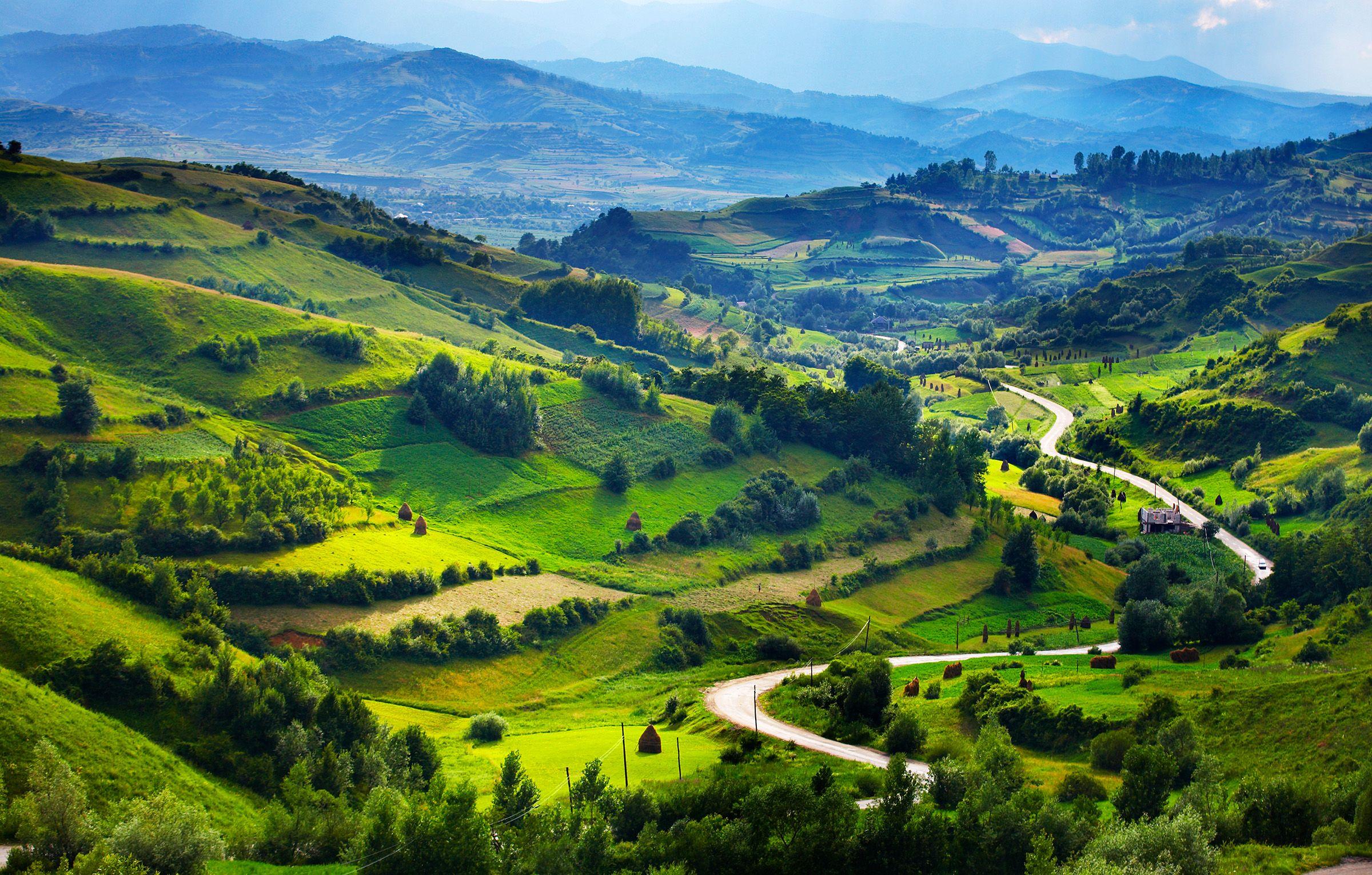
The forests of Transylvania ©Matt Munro/Lonely Planet
Dracula's castle
From Braşov, many vampire hunters head west, towards Bran Castle, although any connection between the splendid manor and Vlad Ţepeş (and with Bram Stoker's novel Dracula) has now been disproved. In fact, Dracula's 'real' castle would be the now-destroyed Poenari fortress: it seems that Vlad III reinforced this castle in the 15th century using Turkish prisoners.